Laura Baines
The Book of MirrorsLaura Baines is a cognitive psychologist whose early work with Professor Joseph Wieder and personal history with Richard Flynn become entangled in the mystery of Wieder’s death and a missing manuscript. Years later, professionally known as Laura Westlake, she is an established academic. Yet her decisive significance lies not only in what she did, but in how little the people trying to understand her can separate the woman from their own interpretations of her.
Identity and Introduction
In 1987, Laura enters Richard Flynn’s life as a new tenant in the house where he is living while studying at Princeton. Their first encounter is an ordinary kitchen mishap: she is trying to get mustard from a tube without removing its foil seal, and Richard takes it from her, opens it, and hands it back. He notices her long blonde hair, thick-framed spectacles, and Midwestern accent. She offers him some of the hot dog she has just boiled; he introduces himself and asks whether she is the new tenant. The scene gives their connection a mundane beginning, before it acquires the weight of romance, suspicion, and retrospective reconstruction.
Their friendship blossoms while Richard is lonely after his father’s sudden death. He describes Laura’s presence as especially important at that point in his life. Two weeks before Thanksgiving, she proposes introducing him to Joseph Wieder, the professor supervising her graduate research. Richard’s first access to Wieder’s work therefore comes through Laura: she is not merely a companion in the story but the person connecting the young writer to the research and the older academic who will eventually dominate his investigation.
Research and Early Relationships
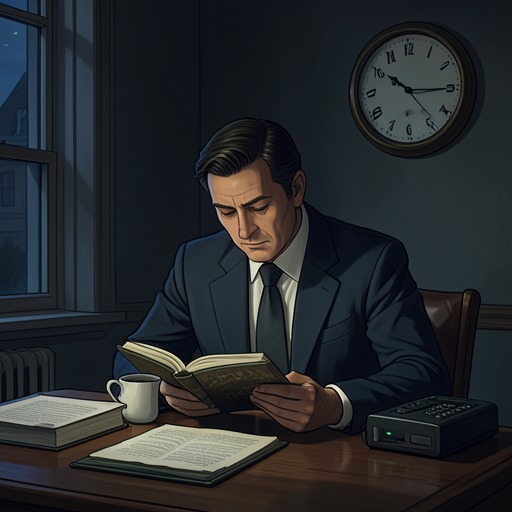
Laura specializes in cognitive psychology, then a developing field attracting attention alongside the arrival of computers in ordinary homes. Her graduate thesis grows out of a research project supervised by Wieder. As she explains it to Richard, Wieder is nearing the end of an ambitious study of the mind, memory, and the relationship between mental stimulus and reaction. The work uses mathematical formulae to quantify variables, and Laura’s mathematical ability has proved valuable because quantitative methods are a weakness for Wieder. Her contribution is thus specific and intellectual: she helps supply a kind of expertise central to the project, rather than simply assisting at its margins.
Laura’s position in Wieder’s research changes over time. She begins as one volunteer among roughly twenty or thirty students, then becomes more closely involved as she and Wieder discuss his work. In her account, he takes a liking to her and brings her into the project at a higher level, where she functions as an assistant. The change has consequences for her personal life. Her boyfriend, an economics major, becomes jealous, follows her, and questions her about her relationship with Wieder. An anonymous letter to the dean accuses Laura and the professor of being lovers. The evidence establishes the accusation and the pressure surrounding it, not that the accusation is true.
Laura tells Richard that the boyfriend had been emotionally uncommitted and that she suspected he was seeing other women. She had been angry with herself for tolerating the relationship. This earlier history helps explain why the allegation about Wieder acquires such force in the story: a professional relationship is viewed through jealousy and suspicion, while the available account does not settle what, if anything, passed between student and professor beyond their research collaboration.
Later Career and Contact with the Investigation
Decades later, Laura has become a prominent psychologist. The investigation identifies Laura Westlake as a professor at Columbia University Medical Center and the director of a joint research program with Cornell. She earned a master’s degree at Princeton in 1988 and a doctorate at Columbia four years later, taught in Zurich in the mid-1990s, and subsequently returned to Columbia. Her professional biography includes specialist training, research programs, and a major prize received in 2006. The contrast with the graduate student in the shared house is striking: the former research assistant has become an influential figure in the field whose early development framed her work.
When John Keller seeks contact, Laura Baines calls him the morning after he leaves a message. Her voice is pleasant and slightly husky, and sounds younger than he expects from a woman over fifty. She already knows that Richard has recently died, but does not know who Keller is or why he is calling. She declines to meet a stranger without more information, asking him to explain the connection before agreeing to see him. Her caution is a concrete boundary, not a disclosure of what she knows about the past; the call opens a channel to her while leaving the central questions unresolved.
Manuscript, Memory, and Conflicting Accounts
Laura’s place in Richard’s history is also filtered through other people’s testimony. Danna Olsen tells Keller that she once contacted Laura after checking Richard’s phone log. Danna had been worried by Richard’s reaction to a call, so she telephoned the number and arranged to meet the woman who answered. Laura introduced herself as Laura Westlake. According to Danna’s account, Laura described herself and Richard as old Princeton acquaintances who had shared a house for several months but had been no more than friends. She characterized their disagreement as unimportant and attributed Richard’s claim that they had been lovers to an overactive imagination or unreliable memory. This is Laura’s reported version, conveyed through Danna; it is not an independent confirmation of the past.
The investigation’s records offer fragments rather than a complete account. Wieder sent a book proposal to Allman & Limpkin in July 1987 with the first chapter enclosed, saying the manuscript was complete. The publisher sent a contract in August. Wieder later requested extra time to polish the work over the holidays, but the full manuscript never arrived after tragedy intervened. Keller’s inquiries into the missing book lead him toward Wieder and away from Richard, while Laura remains difficult to align with the character bearing her name in Richard’s manuscript. He cannot make the real woman and the written figure coincide; they seem to him like two images that will not superimpose.
Near the end of the investigation, Danna admits that she had lied about not knowing where the rest of Richard’s manuscript was. She had read it before his death and withheld it because she felt betrayed by the depth of his love for Laura. Danna believed that Richard had died still loving her, despite his anger, and resented having cared for him through his final months while he devoted himself to the book. Her testimony explains why the manuscript remained hidden, but it describes Danna’s response to Richard’s writing, not proof of a romantic relationship between Richard and Laura.
Ending and Narrative Significance
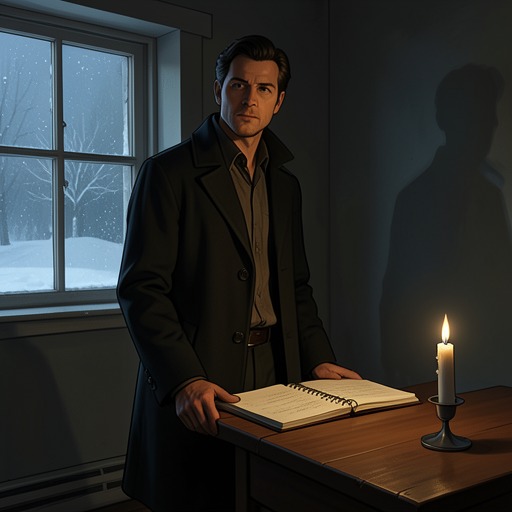
Keller’s final assessment preserves that distinction. He concludes that Richard was probably wrong to the end: Laura had probably taken Wieder’s manuscript and left him dying on the floor, but she had not been Richard’s mistress. The claim about the manuscript remains explicitly provisional, and the absence of an affair is likewise part of Keller’s considered reconstruction rather than a scene witnessed by him. The conclusion therefore does not turn Laura into a fully solved case. It separates a suspected act from the romantic story others have imposed on her.
The book’s closing pattern makes Laura central to its account of distorted recollection. Richard, Wieder, and Derek Simmons have each mistaken their own interpretations for what they saw; Keller finally recognizes that the supposed windows through which they looked were mirrors. Laura is caught in that structure as both a real person and a figure reshaped by memory, jealousy, desire, and fiction. Her career supplies a firm public identity, but the private past remains mediated by testimony and manuscript. The distance between Laura Baines and the written Laura is not an incidental puzzle: it is one of the clearest demonstrations of how the story’s characters confuse what they remember, what they want to believe, and what happened.